Natural Disasters in English for Kids
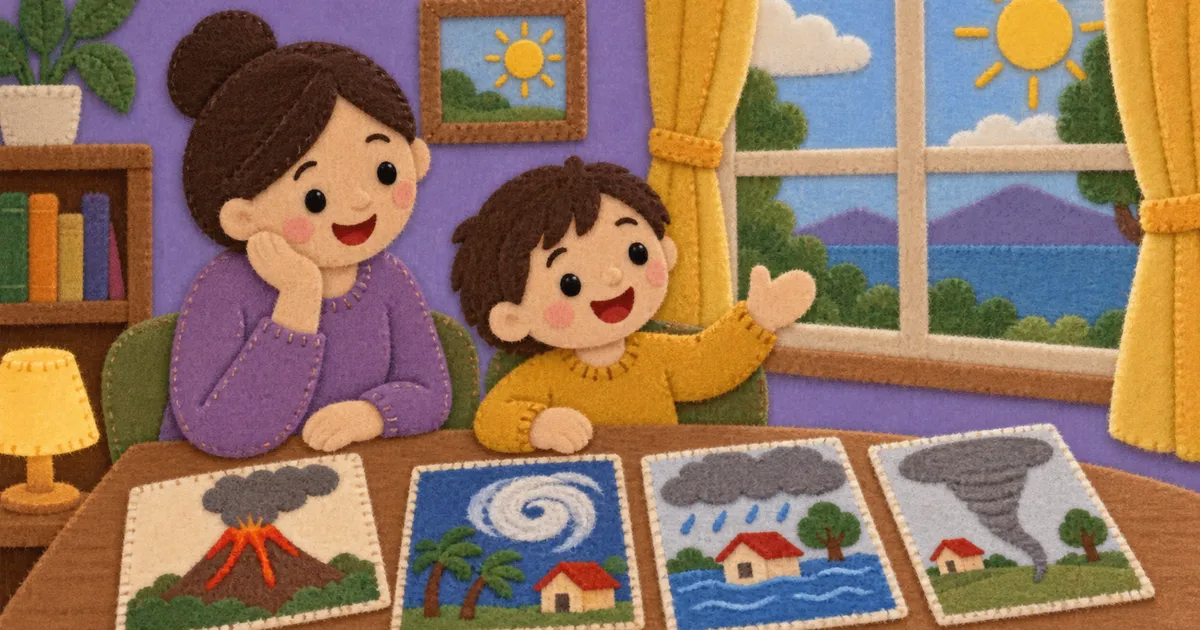
Natural Disasters in English for Kids: Words and Activities presents 16 event and safety terms through pictures, sentences, sorting, and role-play. Children may encounter these words in lessons, books, or news reports. Calm definitions explain the subject without creating fear. Begin with floods and earthquakes, then teach safe responses. Children learn to name events, describe visible details, and follow local safety instructions.
📥 Natural Disasters in English for Kids
Vocabulary, safety phrases, context clues, and calm practice
Leave your email — we'll send the PDF to your inbox.No spam — the PDF plus one short reminder. Unsubscribe anytime.
Core Words and Safety Phrases
Use Natural Disasters in English for Kids: Words and Activities as a short vocabulary unit. Teach four or five words, then revisit them in new sentences. The table contains all 16 terms.
People often call earthquakes, storms, and floods “natural disasters.” More precisely, an event is a natural hazard; a disaster causes serious harm and disruption. Young learners need not memorise the distinction. Older children can discuss why one event type affects communities differently.
Teach complete chunks: a flood warning, a volcanic eruption, an emergency shelter, and follow local instructions. Chunks provide ready language and reduce article and word-order errors.
Examples in Context
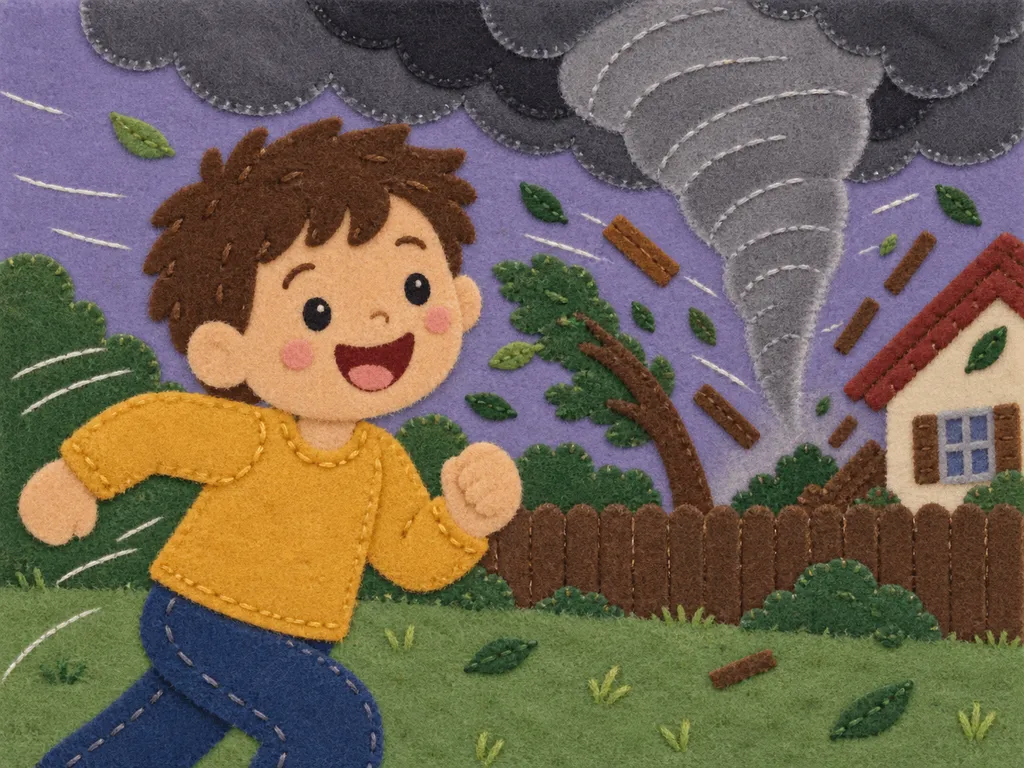
Natural Disasters in English for Kids: Words and Activities works best when each term appears in a short factual sentence: The ground shook during the earthquake, Heavy rain can cause a flood, and The weather service issued a storm warning. Each example explains meaning without dramatic detail.
Ask the child to change one sentence element. The wildfire spread through dry grass can become The wildfire stopped near the road. Give younger learners two choices: “Is an avalanche made of snow or smoke?” Older learners can express reasons with because, results with so, or possibilities with might.
A picture sequence builds context. Show a dark cloud, heavy rain, rising water, an official warning, and people following instructions. The child says one sentence per picture. Focus on observation and language, not managing an imagined emergency.
Activities for Different Ages
Use six large picture cards: earthquake, flood, wildfire, tornado, volcano, and shelter. Say a word, let the child point, then add a matching action. Hands can shake gently for earthquake; fingers can move down a slope for landslide. Avoid alarms and frightening sounds.
Natural Disasters in English for Kids: Words and Activities works well as a sorting task. Children group words under earth, water, weather, and safety. Words may fit several groups, prompting children to explain each choice in English.
Compare short reports from two regions and identify each storm term. Learners then write three sentences: what happened, which warning was given, and what people were asked to do. Our LearnLink tutors can adapt sentence frames to each child’s reading level and languages.
Calm Ways to Practise at Home
Follow a five-minute routine: review three old words, introduce one new word, and finish with one sentence. Next time, give the meaning and ask for the word. Spaced review is easier than recalling all 16 terms in one sitting.
Sort, Choose, and Explain
Write earth, water, weather, and safety on four sheets. Place each vocabulary card beside one heading, then give a reason: “I put tsunami under water because it is a series of sea waves.” Choose one card and make another sentence with can, might, or because.
Multilingual children can match concepts across languages before returning to English. The comparison connects new vocabulary to existing knowledge. Notice similar words; compare different images or patterns without labelling either version strange.
Separate safety advice from vocabulary play. Instructions differ by event and location. Follow guidance from local authorities and the child’s school or care setting; language practice cannot replace an emergency plan.
Common Mistakes and Useful Contrasts
Several terms overlap, so pictures may not suffice. Compare each event’s defining feature and the region where a storm name is used. The table provides rules children can test against new examples.
Grammar creates another common error. Children may say There was earthquake instead of There was an earthquake, or many rain instead of a lot of rain. Model the correction and ask the child to repeat the complete phrase. A brief recast maintains conversation.
Do not label every strong wind, rainy day, or hot afternoon a disaster. Choose storm, heavy rain, or hot day when accurate. Precise vocabulary improves news comprehension and protects each word’s meaning.
- Compare earthquake and volcano pictures with children aged six to nine.
- Practice saying flood, drought, and storm aloud three times without adding articles.
- Sort eight disaster word cards into weather events and earth events together.
- Read a short picture book, then correct two confused word pairs gently.
- Ask your child to explain one contrast using a complete English sentence.
When a word has several meanings or pronunciations, Cambridge Dictionary is a useful check before turning it into child-friendly examples.
Frequently Asked Questions
How Many Natural-disaster Words Should a Child Learn at Once?
Start Natural Disasters in English for Kids: Words and Activities with four to six terms. Recognising, explaining, and using a small set builds stronger knowledge than repeating a long list once. Add another group when the first words appear easily in sentences. Younger children may require several short reviews; older learners can handle larger sets with written examples.
Can English Frighten Younger Children?
Yes, if lessons feature alarming videos, loud sounds, or vivid accounts of harm. Choose neutral drawings, brief definitions, and calm sentences. Explain that adults and local services prepare safety plans. If a child has experienced a disaster or becomes distressed, stop and follow guidance from the family, school, or a suitable professional.
What Is the Difference Between a Hurricane, a Typhoon, and a Cyclone?
The words describe the same broad type of powerful tropical storm, but regional naming varies. Hurricane applies in the Atlantic and north-east Pacific; typhoon applies in the north-west Pacific. Cyclone is the general scientific term and the regional name in other ocean areas. Children can remember: similar storm, different regional name.
How Can Multilingual Children Practise These Words?
Connect each English term to a known word, image, or explanation in another language. Then practise the English term in a full sentence, not through translation alone. A three-column notebook can contain the English word, another-language equivalent, and an English example. Without an exact equivalent, use a small drawing or plain definition instead of forcing a one-word match.
Start your child's English journey today — book a trial lesson with LearnLink.
Stay updated on our latest tips and resources by following us on Instagram LearnLink.